
Grok 4.5 API Watch: Availability and Migration Checks
Track Grok 4.5 API availability without guessing: pricing, context, model ID, OpenRouter status, and migration checks for builders.
I checked this because a model routing plan can get messy fast when a model name starts circulating before the API surface is public. The current state is simple: as of the 2026-06-29 publishing checkpoint, I could not find a public Grok 4.5 API entry in xAI’s official API documentation. The safest current baseline is still Grok 4.3, because it has an official model page, public pricing, capability notes, and runnable examples in the xAI docs.
That is the whole point of this watch page. It is not a launch article. It is a guardrail for API teams that need to know what to verify before replacing Grok 4.3, adding Grok 4.5 to routing, or exposing it behind a customer-facing model selector.
Current Grok 4.5 API Status
What is public as of 2026-06-29
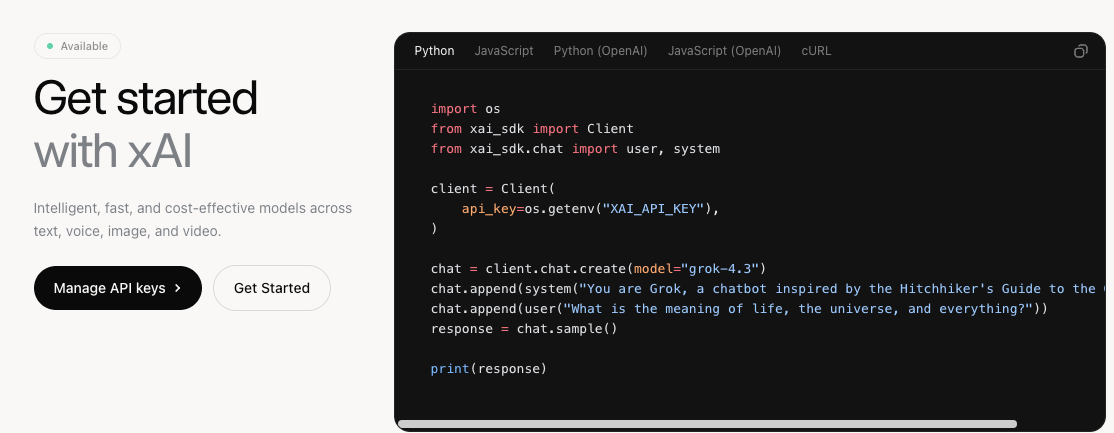
As of this checkpoint, xAI’s official docs list Grok 4.3 as a current model and show examples using grok-4.3 through the API. I did not find a public Grok 4.5 model page, public Grok 4.5 model ID, API pricing row, context-window entry, output limit, or rate-limit page in the official xAI docs I checked.
The right wording is “not public in official API docs,” not “does not exist.” Some reports say Grok 4.5 is in private beta at Tesla and SpaceX, and mention engineering work around SpaceX, Starlink, Starship, Cursor training data, and a newer foundation model. I would treat those as media-reported claims, not API integration facts, until xAI publishes technical or API documentation. A Business Insider report is useful for context, but it is not a substitute for xAI model docs.

Why Grok 4.3 is the safest current baseline
Grok 4.3 is the safer baseline because the official Grok 4.3 model docs publish the model ID, modality notes, context window, pricing, function calling, structured outputs, and configurable reasoning. The xAI overview also uses grok-4.3 in API examples, which makes it a practical migration reference for teams testing current xAI API behavior.
For routing teams, this matters more than the model name. You can write tests against Grok 4.3 today. You can compare latency, cost, refusal shape, JSON stability, and fallback behavior. You cannot responsibly do that for a public Grok 4.5 API until the model appears in official or provider-supported API surfaces.
What Teams Should Watch For
Model ID, pricing, context, output, rate limits
The first update should not be a performance claim. It should be a model card check. Once the Grok 4.5 API appears, the required fields are model ID, input pricing, output pricing, cached-input pricing if available, context window, output limits, rate limits, region or cluster availability, and whether higher-context pricing rules apply.
Do not reserve a guessed model ID in production code. Keep a placeholder in documentation if needed, but do not ship routing rules around a model string that xAI has not published. I paused here because guessed IDs have a way of becoming “temporary” constants that nobody removes.
Tool calling, structured outputs, search, and multimodal support
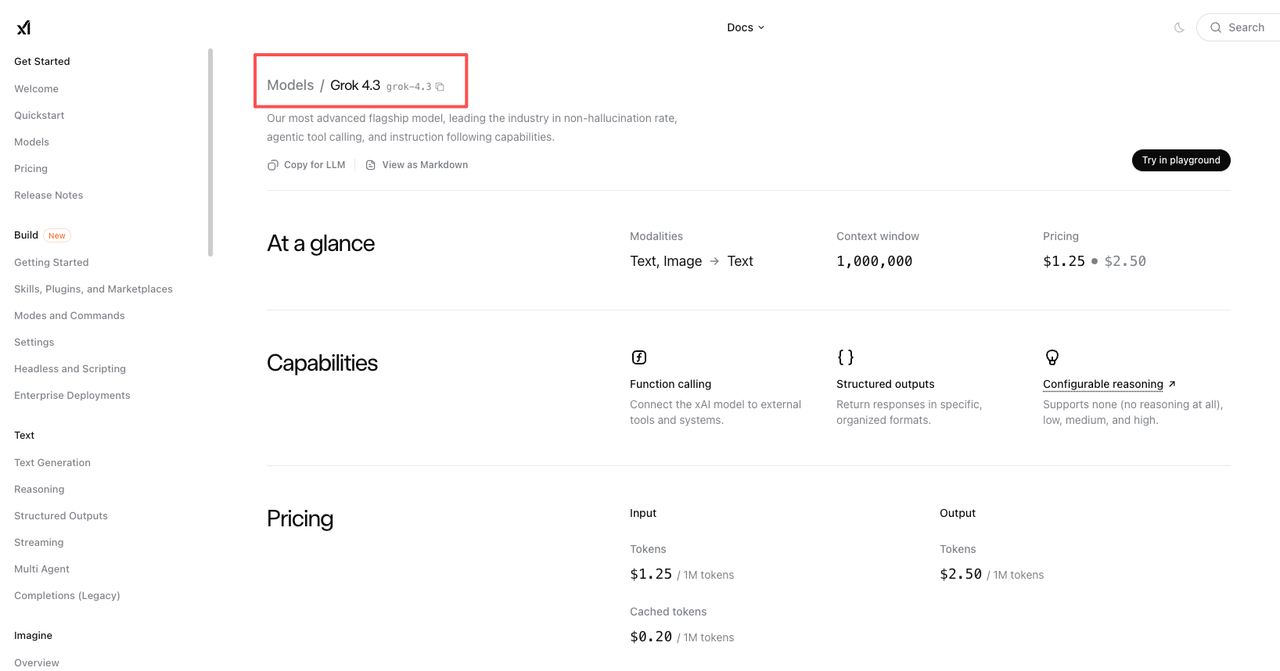
Grok 4.3 already has public notes for function calling, structured outputs, configurable reasoning, text input, image input, and text output. xAI also documents tools such as code execution separately, with examples that use Grok in the API. The migration question for Grok 4.5 is whether those same surfaces exist, change, improve, or break existing assumptions.
I would also check search behavior separately. Search support can affect latency, citations, freshness, and cost. If a model router treats “Grok” as one interchangeable bucket, this is where it usually gets bitten.
Migration Checklist Before Any Switch
Evaluation set, latency, cost, safety, fallback
Before any switch from Grok 4.3 to Grok 4.5, build a small evaluation set that reflects real traffic. Include short prompts, long-context prompts, structured-output prompts, tool-call prompts, safety-sensitive prompts, and prompts that previously failed on Grok 4.3.
Then test latency, output quality, refusal shape, schema stability, token cost, retry behavior, and fallback compatibility. A fallback that returns a different JSON shape is not a fallback. It is another production incident waiting for a quiet Friday afternoon.
Provider availability and billing differences
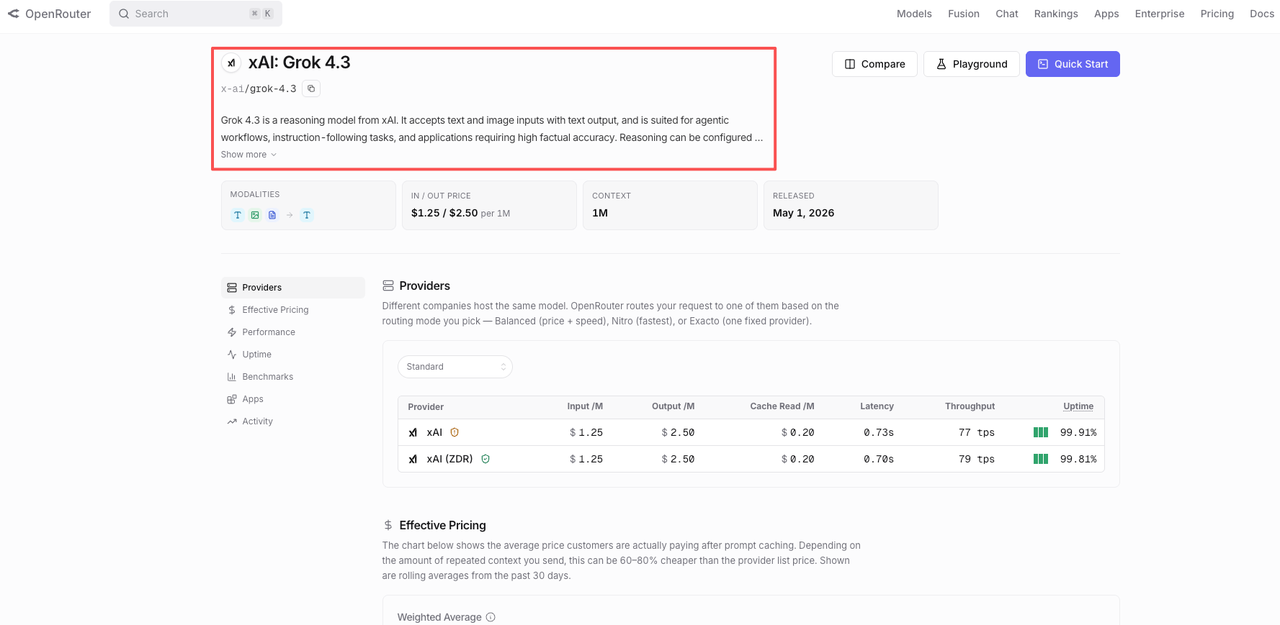
If your stack uses OpenRouter or another model gateway, verify provider availability separately from xAI availability. The OpenRouter Grok 4.3 page currently gives a useful baseline for how a routed provider page may expose model description, pricing, context, providers, routing modes, and reliability signals. That does not imply Grok 4.5 availability. It only defines what to re-check when a Grok 4.5 page appears.
Billing differences matter. xAI direct billing and gateway billing may not match after caching, routing, provider selection, or negotiated rates. Keep cost tests separate from quality tests, or the migration review will blur two different decisions.
How to Keep the Page Updated
Official xAI docs, OpenRouter model page, provider release notes
Before every update, re-check the xAI API docs, the official model pages, OpenRouter, and xAI release channels. The first source of truth should be xAI. OpenRouter is useful for routed availability, but it should not be used to infer direct xAI API availability.
Once Grok 4.5 is public in the API, update this page the same day with model ID, pricing, context window, output limits, rate limits, tool support, structured output behavior, multimodal support, and provider routing notes.
Changelog table and update policy
| Date | Status | What changed | Owner |
|---|---|---|---|
| 2026/6/29 | Watch page created | No public Grok 4.5 API entry found in checked xAI docs; Grok 4.3 kept as baseline | API/content owner |
| Next official update | Pending | Add model ID, pricing, context, rate limits, and provider availability after verification | API/content owner |
Update responsibility should be explicit. Before publishing or refreshing this page, the owner must re-check xAI docs, OpenRouter, and xAI/X release sources. If Grok 4.5 becomes publicly available through the xAI API, the article should be updated the same day.
FAQ
Is Grok 4.5 available in the xAI API?
As of the 2026-06-29 checkpoint, I did not find a public Grok 4.5 API entry in the checked xAI official API docs. Treat Grok 4.5 as unverified for public API integration until xAI publishes the model details.
What should teams use while waiting for Grok 4.5?
Use Grok 4.3 as the current baseline. It has official model documentation, pricing, context information, and API examples.
Should I reserve a Grok 4.5 model ID now?
No. Do not hard-code guessed model IDs. Keep routing rules tied to documented model IDs only.
How often should this API watch page be updated?
During the watch window, check before publishing and again whenever xAI, OpenRouter, or provider release notes change. Once the API is public, update the page the same day.
Conclusion
The safe Grok 4.5 API position is boring: watch, verify, then migrate. Do not build around rumors, guessed IDs, or media-reported architecture notes.
For now, Grok 4.3 is the baseline. Grok 4.5 becomes a migration candidate only after xAI publishes the API-facing details teams can actually test: model ID, pricing, context, output limits, rate limits, tools, structured outputs, and provider availability.
That is all I would ship today. To be verified.
Previous posts: