HappyHorse vs Kling 3.0 vs SkyReels V4: Builder's Guide
HappyHorse-1.0, Kling 3.0, and SkyReels V4 compared for builders: quality, access, open weights, and which fits your production workflow.
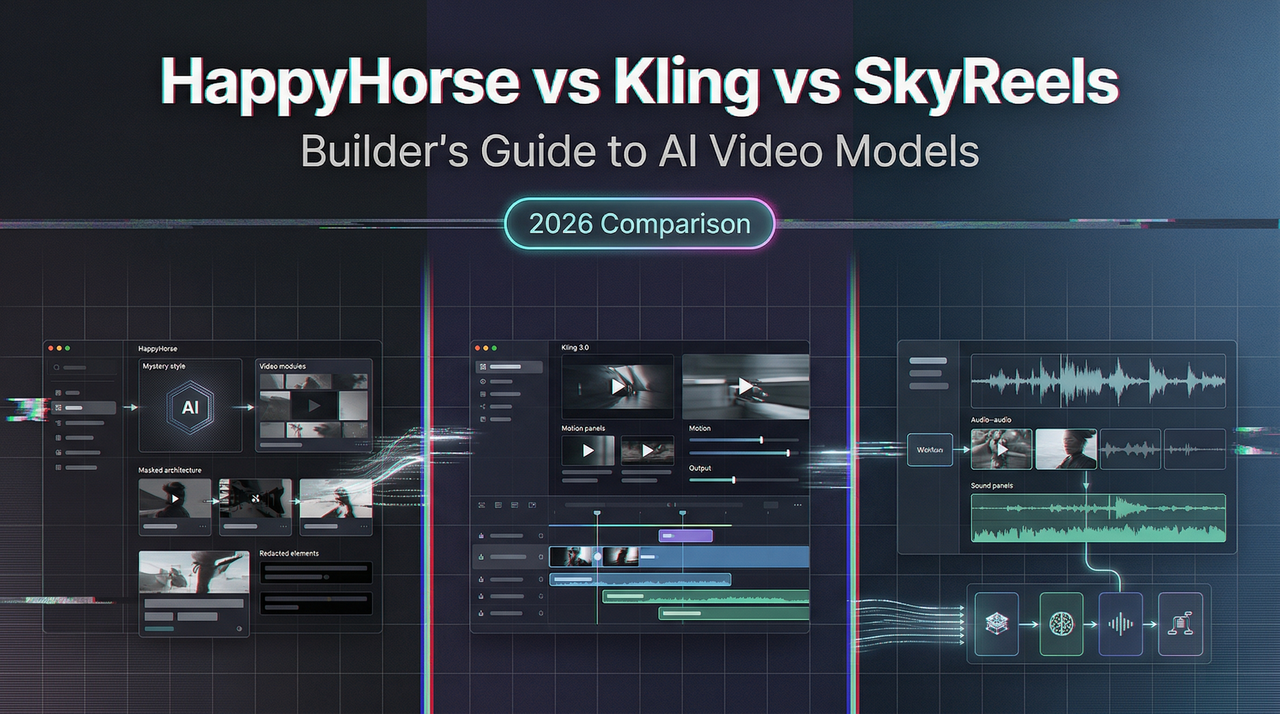
I was mid-way through a model shortlist for a video pipeline when HappyHorse-1.0 landed on the Artificial Analysis leaderboard this week. Forty-eight hours old, already #1. That complicated things.
I paused here. Because having three strong names on a leaderboard and knowing which one to actually build against are two completely different problems. One is about visual quality in blind comparisons. The other is about whether you can call an API at 2am on a Tuesday without something breaking.
So I went through each one properly. This piece documents what I found.
One note upfront: Seedance 2.0 is deliberately absent. It currently leads the T2V with-audio leaderboard at Elo 1220 — if audio quality is your primary filter, it belongs in your shortlist. That comparison is a separate article. Here I’m focused on the three models where the “should I use this?” question is genuinely complicated.
Why These Three Models
Three different positions, not three versions of the same thing
HappyHorse-1.0 is a quality signal with no production path. Kling 3.0 is the production-grade API benchmark that shipped in February. SkyReels V4 entered the leaderboard competitively in March and has accessible pricing — but a catch on open weights.
If you treat this as a pure quality ranking, you’ll make the wrong decision. Having many models on a leaderboard isn’t the problem. Having to actually choose one to build against is.
Why this isn’t a leaderboard ranking
The Artificial Analysis Video Arena measures one thing: which video real users preferred in a blind comparison. It tells you nothing about API stability, pricing predictability, inference latency at scale, or whether you can integrate the model today.
All four of those things matter more than Elo for a platform decision. The leaderboard is an input. It’s not the answer.
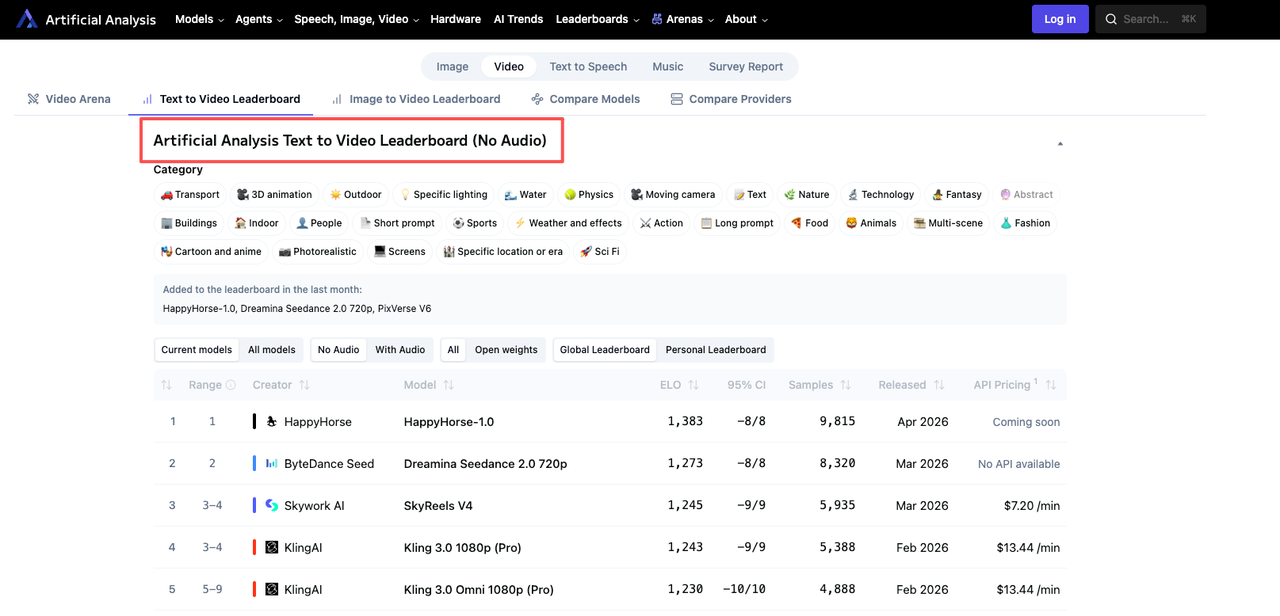
Leaderboard Context (Not the Full Story)
All scores from the Artificial Analysis video leaderboard, as of April 9, 2026. These update daily — verify before making decisions.
| Model | T2V no audio (Elo) | T2V with audio (Elo) | I2V no audio (Elo) |
|---|---|---|---|
| HappyHorse-1.0 | 1357 (#1) | 1215 (#2) | 1402 (#1) |
| Kling 3.0 Pro | 1243 (#4) | ~1105 (#4) | 1297 (#5) |
| SkyReels V4 | 1244 (#3) | 1140 (#3) | — (not in top 5) |
| A 60-point Elo gap means one model wins roughly 58–59% of blind matchups. The gap between HappyHorse and Kling in T2V without audio is 114 points. That’s not noise. The gap between Kling and SkyReels in the same category is 1 point. That is noise. |
Worth noting: HappyHorse has been on the leaderboard for roughly 48 hours. Seedance 2.0 has over 7,500 votes behind its score. More votes means more stable signal. These numbers will move. This conclusion has an expiration date — models update fast.
HappyHorse-1.0
The visual quality signal is real
I want to be careful here. A lot of coverage this week has been either dismissive (“unknown team, ignore it”) or uncritical (“it’s #1, use it”). Both miss the point.
The Elo score is based on real human blind votes. Users see two videos from the same prompt, pick one, don’t know which model made which. HappyHorse has consistently won more of those matchups than everything else in T2V and I2V without audio. That’s signal worth taking seriously — regardless of who built it.
The I2V no-audio margin is particularly notable: 1402 vs. Seedance 2.0’s 1355. A 47-point gap against a model with thousands of votes behind it. Good enough. That’s the most honest assessment I can give.
Architecture: claimed, not confirmed
Affiliated sites describe a single-stream unified Transformer, approximately 15 billion parameters, generating video and audio in one pass. Claimed inference speed around 38 seconds for a 1080p clip on a single H100.
I don’t know if these numbers are accurate. Better than making something up. No technical paper exists. No independent verification. Treat all architectural details as claimed until weights and code ship.
The team has been tentatively identified as Future Life Lab at Taotian Group (Alibaba), led by Zhang Di (formerly head of Kling AI at Kuaishou). Not officially confirmed by any party.
Access reality: demo only, nothing to integrate
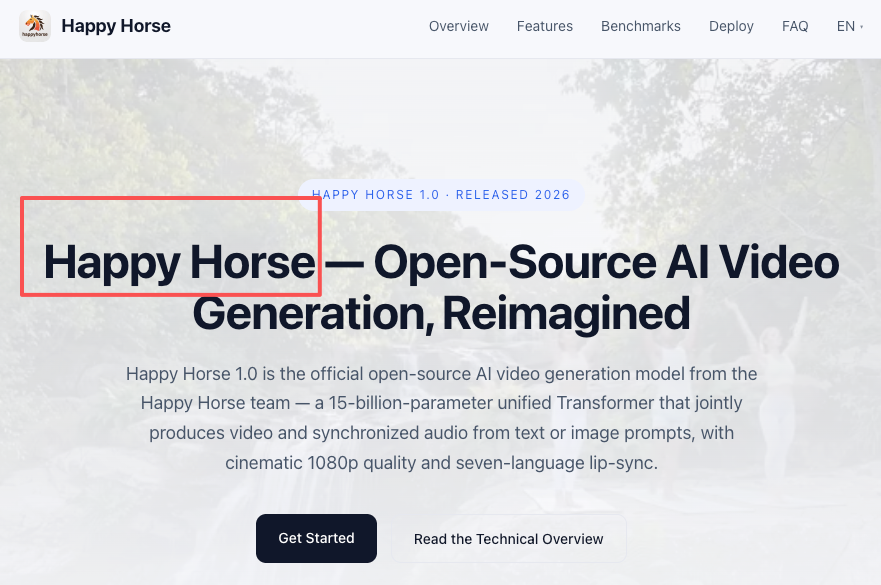
As of April 9, 2026: GitHub and Hugging Face links on the official site return “coming soon” pages or 404 errors. No API. No downloadable weights. Third-party demo sites exist but are not from the model developer.
You can try outputs through the Artificial Analysis arena. That’s the confirmed path.
Three things would move HappyHorse from “leaderboard entry” to “real option”: a GitHub repository with actual weights and inference code, a Hugging Face model card with verifiable details and a license, or an API endpoint with documented pricing. None exist as of this writing.
Best for
Evaluation and monitoring. Not viable for production today.
Kling 3.0
Leaderboard position: competitive, not leading
Kling 3.0 Pro sits at Elo 1243 in T2V without audio — 114 points below HappyHorse. In T2V with audio, Kling 3.0 Omni scores around 1105, fourth position. Solid scores. Not dominant ones.
The honest read: Kling 3.0’s visual quality is good. It’s not best-in-class by blind-vote metrics right now. Its value is elsewhere.
Two months of live API. That matters more than it sounds.
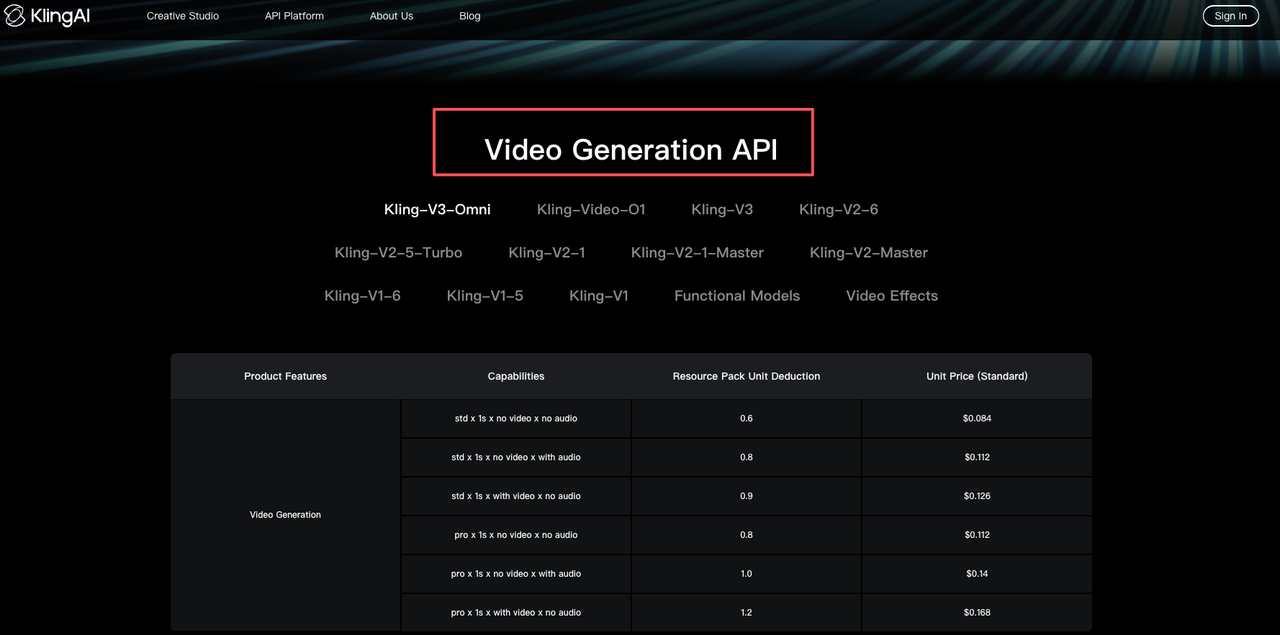 Kling 3.0 shipped February 5, 2026. The API has been live for two months. Multiple providers — PiAPI, fal.ai, WaveSpeed, and the official KlingAI developer platform — have documented endpoints and published pricing. That’s a real operational advantage over a model that landed on a leaderboard last Tuesday.
Good infrastructure makes you forget it’s there. Kling 3.0 has had two months to become that kind of infrastructure. HappyHorse hasn’t had two days.
One feature worth flagging that doesn’t appear in Elo: Motion Control. Upload a reference video, extract its motion pattern, apply it to a different subject. No documented equivalent exists in HappyHorse or SkyReels V4 right now. For specific use cases — character animation, motion transfer — this matters independently of quality scores.
Pricing: wide variance across providers, verify before committing
Third-party providers charge roughly $0.075–$0.168 per second for Standard (720p) and $0.100–$0.224 per second for Pro (1080p). The lower end comes from providers with volume agreements. Subscription plans on the native platform start around $10/month.
One fewer switch between providers can save a lot of re-adaptation time. But the pricing gap between providers is real — verify at the official pricing page before committing. Credit expiration (monthly subscription credits expire; purchased units have a 2-year window) is a real budget factor at high volume.
Best for
Production workflows that need a reliable API today. The Elo gap versus HappyHorse is meaningful. The operational gap — two months of live API, multiple documented providers, known operator — is more meaningful for a builder making a platform decision right now.
SkyReels V4
Leaderboard position: tied with Kling in T2V, stronger on audio
SkyReels V4 sits at Elo 1244 in T2V without audio — one point above Kling 3.0 Pro. One point is noise. Treat them as equal on visual quality in that category.
In T2V with audio, SkyReels V4 scores 1140 (#3), meaningfully above Kling 3.0 Omni’s ~1105. That 35-point gap is more than noise. For audio-required workflows where you don’t need Seedance 2.0’s top-of-table score, SkyReels V4 is the value play.
SkyReels V4 doesn’t appear in the I2V leaderboard top five in either category. If image-to-video is your primary use case, this changes the calculation significantly.
Open weights: V3 yes, V4 not yet
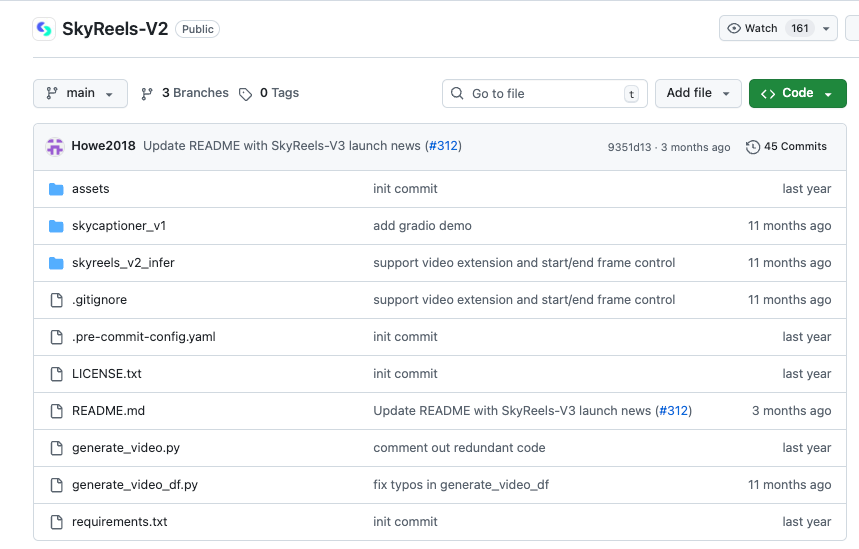
SkyworkAI has open-sourced every previous SkyReels version. V3 weights are on Hugging Face and GitHub with inference code. V4 was announced April 3, 2026 — the technical paper is public, but weights and code haven’t shipped.
Found the pattern on the third version: Skywork releases weights. V1, V2, V3 — all shipped. V4’s track record suggests it will follow. But “likely” and “confirmed” are different things, and there’s no published timeline. This is where my data ends.
API availability: accessible now, track record shorter than Kling’s
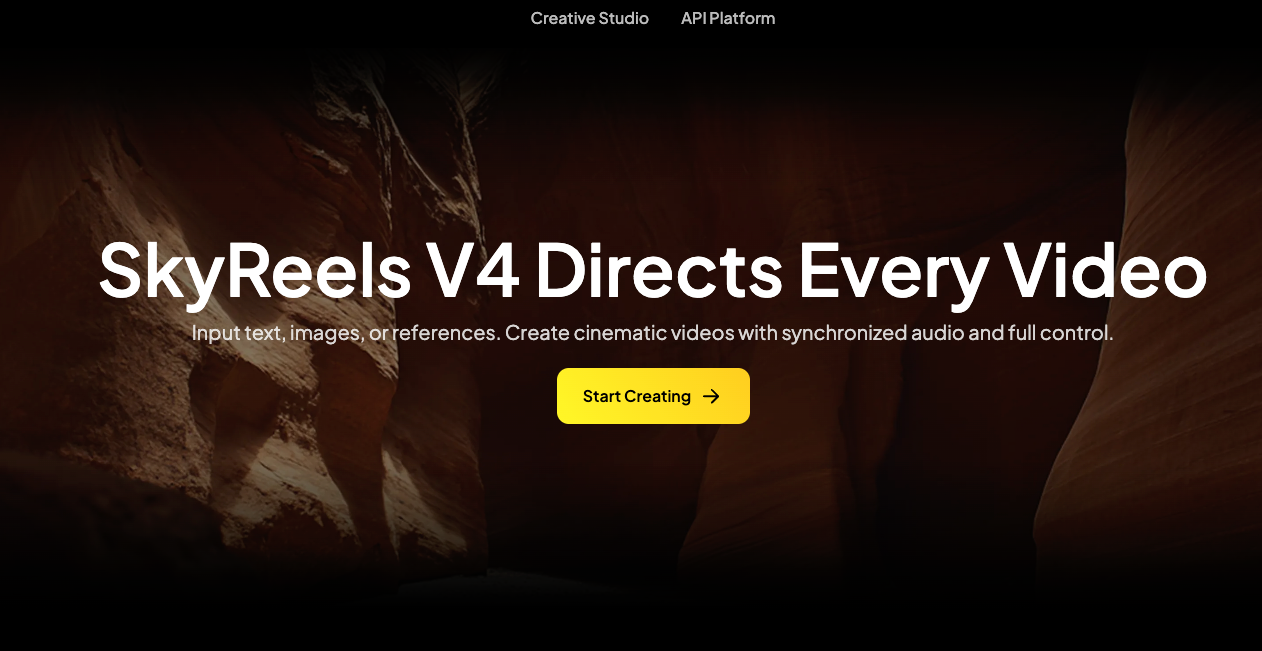 Unlike HappyHorse, SkyReels V4 has a working API path today. The SkyReels platform offers both web app and API access. Atlas Cloud has announced integration. Pricing reported at $7.20 per minute with audio and $8.40 per minute without — below Kling’s top-tier pricing at comparable T2V quality.
Verify current API status and pricing directly. The platform is newer than Kling’s. Works for my frequency. Yours might differ.
Best for
Teams that want a quality-competitive alternative to Kling 3.0 with accessible API pricing and an open-weights preference — and whose primary use case is T2V rather than I2V.
Five-Dimension Comparison
| Dimension | HappyHorse-1.0 | Kling 3.0 | SkyReels V4 |
|---|---|---|---|
| Visual quality (T2V Elo) | 1357 (#1) | 1243 (#4) | 1244 (#3) |
| Audio capability | #2 T2V, integrated | #4 T2V, integrated | #3 T2V, integrated |
| API availability | None | ✅ Multi-provider | ✅ Platform + third-party |
| Open weights | Not released | ❌ Closed source | V3 ✅ / V4 pending |
| Known provider | Pseudonymous | Kuaishou | Skywork AI / Kunlun Tech |
| Production readiness | ❌ Not viable | ✅ Two months live | ⚠️ Accessible, newer |
Decision Framework
Need production API right now → Kling 3.0. Two months live, multiple documented providers, known operator. The Elo score trails HappyHorse by 114 points. The operational stability leads by two months. For most builders making a decision today, start here.
Want open weights with competitive T2V standing → SkyReels V4. V3 weights available now. V4 API accessible at pricing below Kling’s top tier. If Skywork follows their track record and releases V4 weights, this gets more interesting. Check the Hugging Face page directly for current status before planning around it.
Evaluating visual quality for future integration → HappyHorse. The signal is real. Set a monitor for a GitHub or Hugging Face release. When weights or a stable API drop, run it against your actual use case before committing. Don’t restructure a pipeline around a model you can’t access.
Audio quality is the priority → Seedance 2.0. None of these three lead the with-audio leaderboard. Seedance 2.0 at Elo 1220 is ahead of HappyHorse (1215), well above SkyReels V4 (1140) and Kling 3.0 Omni (~1105). If audio drives your decision, start there.
FAQ
Which has the best visual quality among these three?
HappyHorse-1.0, based on current blind-vote data. T2V Elo 1357, I2V 1402. Caveat: scores from 48 hours for a new entrant are more volatile than established models with thousands of votes. Check the live leaderboard before making decisions. Always.
Can I switch from Kling 3.0 to HappyHorse-1.0 easily if weights drop?
Depends on integration depth. If you’re calling a multi-model API proxy, it could be a parameter change. If you’ve built around Kling-specific features — Motion Control, reference video workflows — those don’t have documented equivalents in HappyHorse yet. Build with some abstraction layer if you’re planning to evaluate new models as they release. Once the workflow runs end-to-end, how fast each step is matters less than not having to rebuild it.
Is SkyReels V4 fully open source?
V3 is. V4 is not yet — the technical paper is public, weights and code haven’t shipped as of publication. Skywork’s track record on V1 through V3 makes this more credible than HappyHorse’s “coming soon.” Verify current status on the SkyworkAI GitHub directly.
How do these models compare on generation speed?
HappyHorse claims approximately 10 seconds per generation — unverified, from affiliated sites. Kling 3.0 user-reported times range from 2 to 15 minutes depending on complexity and server load. SkyReels V4 uses a keyframe-plus-superresolution approach that adds processing steps. Speed comparisons across models with different access paths are hard to verify apples-to-apples. Treat all published speed claims as directional.
Which is most cost-effective for high-volume production?
Kling 3.0 through a volume-discount third-party provider: around $0.075 per second for Standard. SkyReels V4 reported at $7.20 per minute ($0.12/s) with audio. HappyHorse has no production pricing — no API. For high-volume production today, Kling 3.0 is the most cost-effective option with a documented track record.
Run it yourself. That’ll tell you more than anything I say.
Previous posts:
Related Articles
Why Is HappyHorse-1.0 Suddenly #1 on Video Leaderboard?
HappyHorse-1.0 vs Seedance 2.0: Which Wins Right Now?
Is HappyHorse-1.0 Open Source? What We Can Verify

What Is HappyHorse-1.0? The Mystery #1 AI Video Model

Where to Try HappyHorse-1.0: Access and Availability