

Ai GIF Generator
Generate animated GIFs from images using WaveSpeed's AI API. Control frame rate, loop count, and resolution.
This query is less about “no rules” and more about lower friction.
When people type this phrase, they are usually looking for a tool that gets to a usable image faster. The label is secondary. The workflow is the real product.
Most users really want broader style range, faster iteration, and fewer dead ends before the first promising draft.

What to compare before you choose.
If you compare workflow instead of marketing copy, the evaluation gets much clearer.
Some models follow instructions better than others.
Clearer outputs, fewer ignored details.
You may want realism, art, or concept work.
More than one visual mode.
Text-only tools can feel random.
Uploads, editing, or image-to-image paths.
Many users want to test before committing.
Easy first use, less setup.
WaveSpeed fits better when you want to move between modes, not stay trapped in one.
That is the real advantage for this query: you can move from quick draft to prompt control to reference-based editing without rebuilding your process each time.
Fast image models
Good when you want many drafts fast and need to pressure-test loose ideas before polishing.
Prompt-focused models
Better when the prompt needs to be followed closely and small wording changes matter.
Editing models
Useful for reference-based work, variation passes, and controlled style shifts.
Image-to-image paths
Helpful when you already have a visual baseline and want tighter control over outcomes.
Let the image story keep moving.
Since this page already has a lot of visual material, a looping gallery works better than leaving every image trapped in its own static block. It gives the page a rhythm and helps people understand the range faster.


Test range with prompts that actually expose differences.
Simple prompts hide too much. Use scenes that reveal style range, structure, and prompt adherence.
A cinematic portrait with soft rim light and a blue background.
A futuristic city at sunrise, wide angle, highly detailed.
A product mockup on a clean studio table with natural shadows.
A surreal poster with bold color contrast and sharp typography.
A reference image remix that keeps the pose but changes the style.
A luxury editorial still life with reflective metal, soft daylight, and minimalist staging.
Where this kind of tool works best.
This is especially useful when you want creative freedom but still care about consistency, speed, and being able to keep iterating without switching stacks.
You want a tool that can sketch fast, shift style quickly, and still give you a path into more controlled editing once the first draft is close.
Different models respond differently to the same prompt, which is exactly why the “best” tool for this search is often the platform that lets you compare instead of commit too early.
How to use it in three steps.
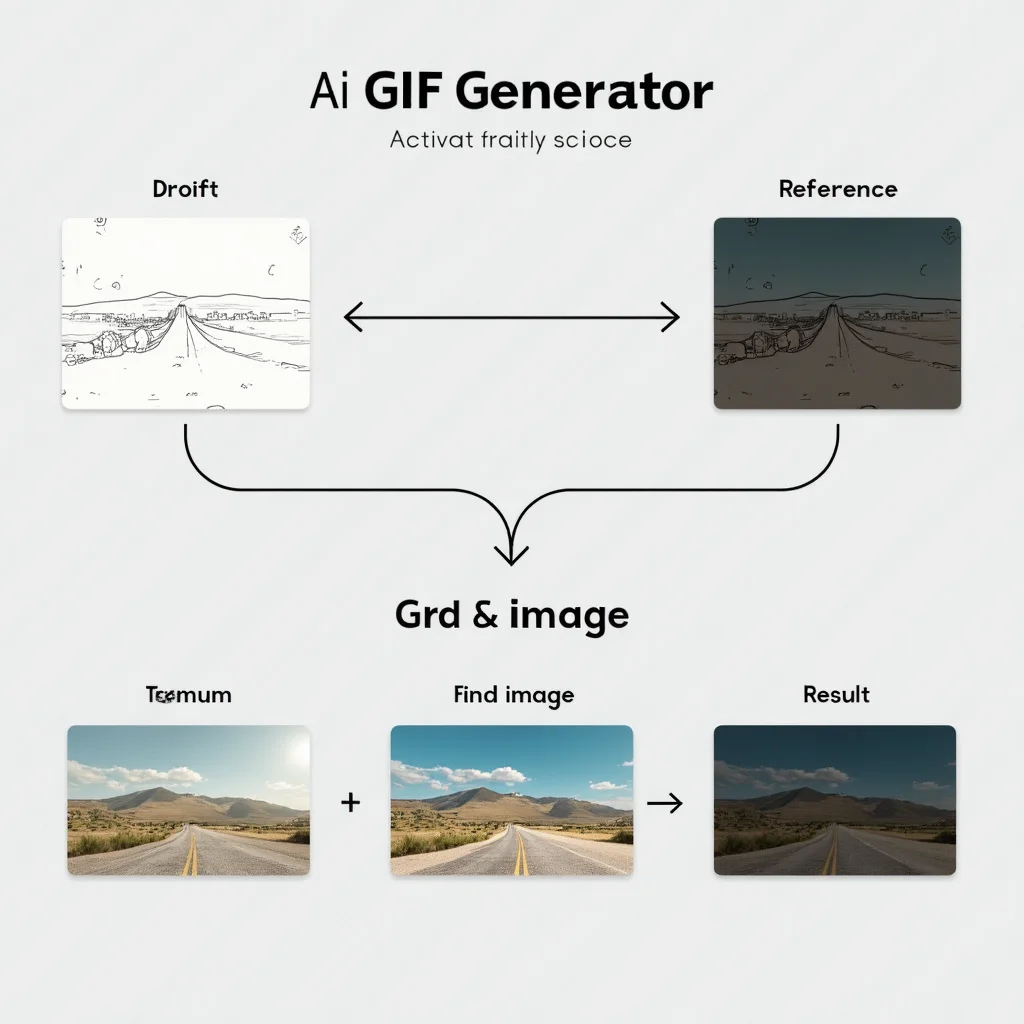
Start with an open-ended prompt
Enter a prompt or upload a reference image.
Switch models when the style drifts
Choose a model based on speed, editing, or prompt fidelity.
Move into reference or edit mode
Generate, review, and compare results until you find the direction you want.
FAQ
What is the fastest way to create a GIF on WaveSpeed?+
The Studio GIF Maker at [wavespeed.ai/models](https://wavespeed.ai/models) is the quickest path. Upload an image, set your parameters, and download. No API key required and no account needed to start.
Can I generate GIFs through the API for automated workflows?+
Yes. WaveSpeed's video generation models support GIF as a direct output format through the REST API. Send your request with the desired parameters and retrieve the GIF from the output URL. For current endpoint details, see the [WaveSpeed API documentation](https://wavespeed.ai/docs).
What input file types does WaveSpeed accept?+
For image-to-GIF generation, WaveSpeed accepts JPG, PNG, and WebP. For text-to-GIF, no source file is needed. Check the specific model page for any dimension or file size constraints.
What frame rate should I use for social media GIFs?+
15 fps works well for most social platforms, balancing smoothness with file size. Use 24 fps when smoothness matters more than file weight. Drop to 10 fps for short loops where a choppier, retro look is intentional.
What resolution should I target?+
Most social platforms render GIFs at 480px width or wider. Match the platform spec before generating to avoid upscaling artifacts or unexpected cropping. For Giphy uploads, 480x480px at 15 fps under 8MB is a reliable target.
Is there a file size limit I need to know about?+
Platform limits vary. Twitter/X caps GIFs at 15MB. Discord standard accounts cap at 8MB. Giphy accepts up to 100MB. A 3-second loop at 480px and 15 fps stays well within most of these limits.
Can I control how many times the GIF loops?+
Yes. Set the loop parameter to 0 for infinite looping, or specify a number for a finite repeat count. Infinite loop is standard for social media. For exact parameter names per model, refer to the model documentation.
Does WaveSpeed require a subscription?+
The Studio GIF Maker is free to use without a subscription. API usage is subject to the current pricing and rate limits listed on [wavespeed.ai](https://wavespeed.ai). No subscription is required to start generating. --- If you want one more adjacent example before deciding, [free AI image to video generator](https://wavespeed.ai/image-generator/free-ai-image-to-video-generator) is worth opening next. To compare this with an outside example, [Canva GIF maker](https://wavespeed.ai/models) is a helpful place to look next.